


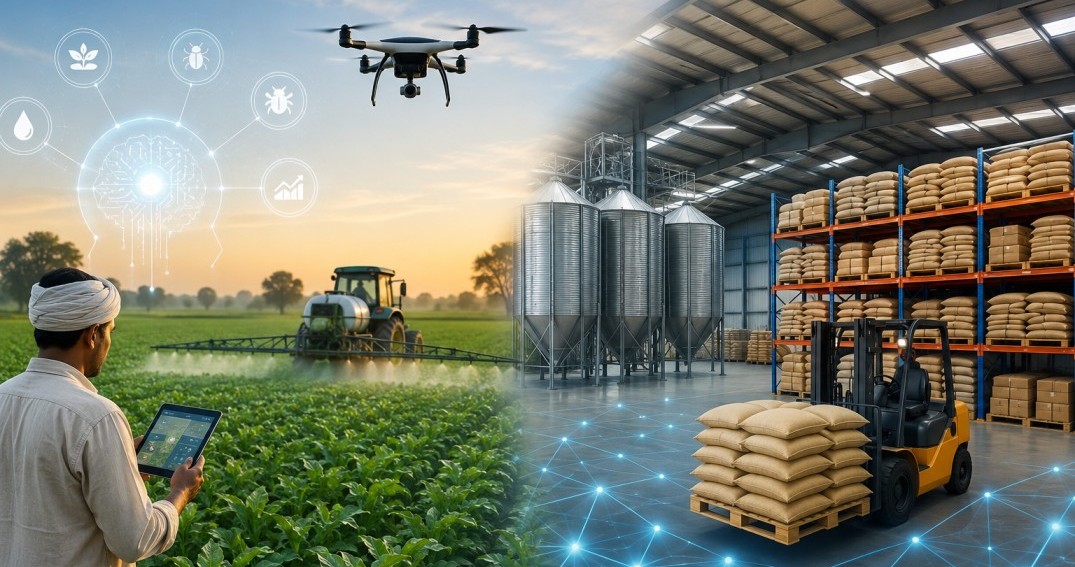
Technology in Indian agriculture is becoming an increasingly important part of that transformation. Through satellite-based crop monitoring, digital marketplaces, warehouse management systems and technology-enabled finance, agritech is helping connect different parts of an agricultural value chain that has traditionally operated in silos.
India’s Digital Agriculture Mission has an approved outlay of ₹2,817 crore and is building digital infrastructure including AgriStack, the Krishi Decision Support System and digital farmer and crop registries. At the same time, StarAgri is combining physical infrastructure with digital capabilities to address challenges across the farm-to-market journey.
What is an agritech company?
If put simply, an agritech platform uses technology to solve challenges across agriculture. This can include solutions for farming, crop monitoring, procurement, warehousing, finance, quality assessment, market access and supply-chain management.
Unlike technology companies focused only on software, modern agritech platforms can combine digital tools with physical agricultural infrastructure. This is the approach behind StarAgri’s “phygital” model, which brings together physical infrastructure and digital technology across pre- and post-harvest activities.

Importance of agritech in India
Agritech is important in India because technology can help address challenges across farming, procurement, storage, finance, quality assessment and agricultural supply chains. Instead of digitising only one part of agriculture, modern agritech solutions can connect multiple stakeholders and stages of the farm-to-market journey.
The government’s Digital Agriculture Mission is also supporting the development of digital public infrastructure for agriculture, creating opportunities for greater use of data and technology across the sector. Technology can help bridge gaps in:
- Farm intelligence
- Market information
- Access to finance
- Storage
- Quality assessment
- Procurement
- Traceability
- Supply-chain visibility
The opportunity is therefore not just about making farming digital. It is about making the entire agricultural value chain more connected.
What are the challenges in Indian agriculture
Farmers have been and still face limited access to organised markets, price uncertainty, post-harvest losses and inadequate storage. Businesses face fragmented supply chains and inconsistent commodity quality. Financial institutions need better visibility into agricultural collateral and borrower risk. There is also a significant information gap.
A farmer may know how much produce has been harvested but not necessarily which market offers the best opportunity. A lender may have a borrower’s financial records but limited real-time visibility into agricultural assets. A buyer may need commodities of a particular quality but struggle to source them consistently.
How an agritech company in India solves these challenges
Agritech connects information, infrastructure and stakeholders.
Digital platforms can improve market access. Remote sensing can generate crop intelligence. IoT can support warehouse monitoring. Digital records can improve traceability. Data analytics can support procurement and financing decisions. The result is a major switch from reactive decision-making towards more informed and connected agricultural operations.

StarAgri’s role in the agricultural value chain
StarAgri is an integrated agritech company in India that combines technology, agricultural infrastructure and financial services to address challenges across the farm-to-market value chain.
Technology is not simply an add-on to StarAgri’s agricultural services. It is an important enabler of its integrated value-chain model. The company connects farmers, traders, processors, FPOs, banks, financial institutions and agribusinesses through a combination of physical infrastructure and digital capabilities.
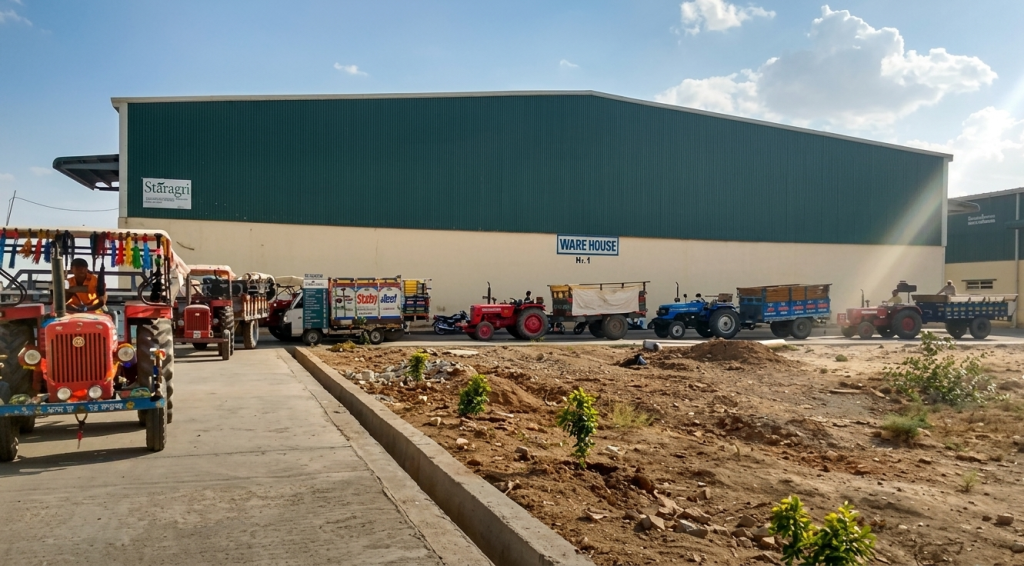
According to StarAgri’s current website, its network includes more than 2,200 scientific warehouses, approximately 5 million metric tonnes of storage capacity and a presence across 19 states.
Core services offered by StarAgri
StarAgri’s agricultural ecosystem includes:
- Warehousing: Scientific storage solutions designed to protect commodity quality and integrity.
- Collateral Management: Services that help financial institutions manage commodities used as collateral for agricultural lending.
- Financing Solutions: Working-capital and other agri/non-agri financing solutions through its ecosystem, including Agriwise Finserv.
- Procurement: Sourcing of agricultural commodities across a network covering more than 110 commodities.
- Trade Facilitation: Connecting buyers and sellers for agricultural commodities.
- Star Labs: NABL, FSSAI, & APEDA certified agricultural commodity testing facilities.
- Digital Marketplace: Precision agriculture and digital trading through agribazaar.
- Agri Exports: Supporting agricultural trade beyond Indian markets.
Technologies behind StarAgri’s solutions
Technology sits across multiple layers of StarAgri’s ecosystem. The company uses AI, Machine Learning, remote sensing, blockchain, IoT and data analytics across different applications. Its Agribhumi platform uses remote sensing and AI/ML to generate agricultural insights, while its warehouse technology supports inventory visibility and digital warehouse receipts.
This combination of physical and digital infrastructure is important because agricultural transformation cannot happen through software alone.
Why choose StarAgri
For stakeholders across the value chain, an integrated agritech company in India can offer several advantages:
- Greater supply-chain visibility
- Access to scientific storage
- Better market connectivity
- Technology-enabled agricultural insights
- Structured financing opportunities
- Quality assessment
- More efficient procurement
- Reduced operational fragmentation
The value comes from connecting these services rather than treating them as independent activities. StarAgri’s ecosystem serves farmers, FPOs, traders, millers, processors, exporters, banks, NBFCs, MSMEs and corporates. The company has more than 3 lakh stakeholders who rely on its services. This broad stakeholder base highlights the role of agritech beyond the farm itself.
Future of agritech in India
The next phase of agritech is likely to move from individual digital tools towards integrated agricultural ecosystems. AI could help predict crop conditions. Satellite data could strengthen farm intelligence. Digital marketplaces could improve price discovery. Warehouse technology could improve inventory visibility. Alternative data could support more informed agricultural lending. Government-led digital infrastructure will further accelerate this transition.
For agritech companies, the opportunity is therefore to connect data, capital, commodities and markets in ways that create practical value for agricultural stakeholders.
Conclusion
An agritech company in India is not simply about putting an app in a farmer’s hands. The larger opportunity lies in transforming how the agricultural value chain works from farm intelligence and financing to storage, quality assessment, procurement and market access.
StarAgri brings these capabilities together through an integrated combination of physical infrastructure, financial services and technology. By connecting farmers, FPOs, traders, financial institutions, processors and other agricultural stakeholders, the company aims to reduce fragmentation across the farm-to-market journey.
As India’s agricultural ecosystem becomes increasingly connected, agritech companies that combine technology with on-ground execution can play an important role in shaping the future of Indian agriculture.
FAQs
- What is an agritech company?
An agritech company uses technology to solve challenges across agriculture, including farming, crop intelligence, finance, storage, procurement, trading and supply-chain management. - What does StarAgri do?
StarAgri provides integrated agricultural value-chain services including warehousing, collateral management, financing solutions, procurement, trade facilitation, quality testing, digital marketplaces and technology-based agricultural insights. - How does StarAgri use technology in agriculture?
StarAgri uses AI, ML, remote sensing, blockchain, IoT and data analytics across areas such as crop monitoring, yield estimation, warehouse management, commodity traceability and agricultural trade. - Who can use StarAgri’s services?
Farmers, FPOs, traders, processors, millers, exporters, banks, NBFCs, MSMEs and other agribusinesses can use different StarAgri services depending on their requirements. - Why is agritech important for India’s agricultural future?
Agritech can help address fragmented markets, limited information, financing gaps, storage challenges and supply-chain inefficiencies by connecting stakeholders through data, digital platforms and physical infrastructure.
